Any links to online stores should be assumed to be affiliates. The company or PR agency provides all or most review samples. They have no control over my content, and I provide my honest opinion.
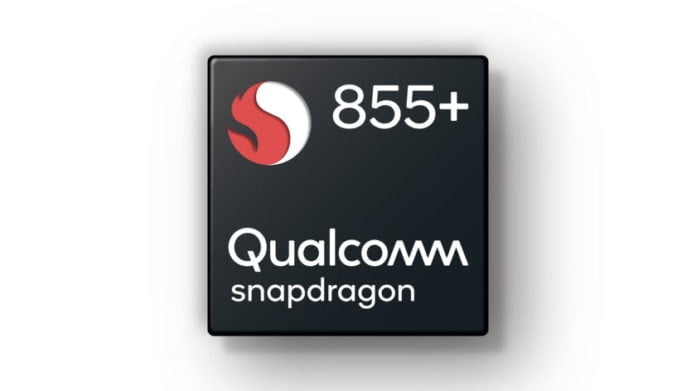
Qualcomm has announced a refresh to their Snapdragon 855 SoC in the form of the Snapdragon 855+. It has been a while since Qualcomm launched a mid-life product refresh of a flagship system on a chip. The last instance was the Snapdragon 821, though last year there were some limited higher bin variants of the SD845. More recently the Snapdragon 712 was just a higher clocked SD710.
The new Snapdragon 855 Plus does a little more than add 100Mhz that the SD712 did. Qualcomm has raised the clocks of the Prime CPU core by 120Mhz from 2.84GHz to up to 2.96GHz, giving a 4.2% boost for single-threaded workloads.
They have also raised the GPU clocks by 87Mhz from 585MHz to 672MHz, which doesn’t sound like an awful lot but it is just shy of a 15% boost and will inevitably make this a popular choice for gaming orientated phones.
Last year it was the ASUS ROG Phone that used the binned SD845 chips so it comes as no surprise that the new ROG Phone 2 will be the first to use the Snapdragon 855 Plus.
There is also some speculation that the Samsung Note 10 may use the new chip too. I would be sceptical of this though unless Samsung also refreshes their Exynos 9820 with higher refresh rates to reflect the performance increase for the phone in the European markets.
Currently, Huawei is set to launch their new chips this year, current rumours indicate that a Kirin 985 is set to launch this year and maybe the Kirin 990 as a mid-cycle refresh. This would deviate from their normal trend in the past few years where we would have expected the Kirin 990 to launch at IFA.
Depending on which benchmarking table you look at, currently the Snapdragon 855 rules the roots with the top 7 phones of Antutu being SD855 including the OnePlus 7 Pro, Xiaomi Mi 9 and Black Shark 2 in the top 3. Followed by the Exynos 9820 Samsung S10 devices, then the Kirin 980 based devices below that.
So it is likely that for the time being the Snapdragon 855 Plus will be the most powerful chip on the market. Which will then likely be beaten by the Kirin 985 in the Mate 30 Pro, and the cycle of one-upmanship will continue.
[table id=41 /]