Any links to online stores should be assumed to be affiliates. The company or PR agency provides all or most review samples. They have no control over my content, and I provide my honest opinion.
Today, Infinix has announced the Infinix Zero 30 5G, which appears to be the successor to the Infinix Ultra, which I reviewed in October 2022.
The Infinix Zero 30 has a significantly upgraded chipset from its predecessor, which is essential as it helps justify the higher price point that Infinix wants for the Zero models.
Recently, I have also reviewed the Infinix Note 30 VIP and the GT 10 Pro, which use the Dimensity 8050. This is fractionally better than the 8020 on the new Zero 30, and I am not really sure why Infinix would use a slightly slower chipset on their premium phone.
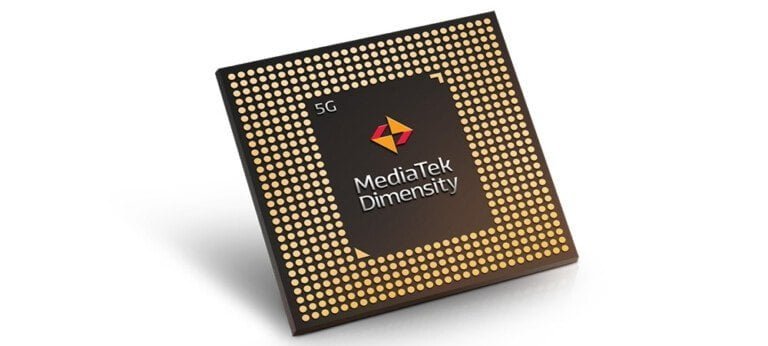
MediaTek Dimensity 8020 vs Dimensity 8050 vs Dimensity 920 Specification
[table id=570 /]
The MediaTek Dimensity 8020 is a significant upgrade to the Dimensity 920, which was used on the Infinix Ultra, so we should see a big improvement in the benchmarks for this phone.
As you can see from the specification, the MediaTek Dimensity 8020 is essentially the same as the Dimensity 8050, which is used on the Note 30 VIP and Infinix GT 10 Pro.
The only difference is that all the A78 cores are clocked at 2.6 GHz, whereas the 8050 has that single core at 3GHz.
That represents a 15% increase in the frequency of the single A78 core for the Dimensity 8050
How much does that single faster core impact the overall performance?
MediaTek Dimensity 8020 vs Dimensity 8050 vs Dimensity 920 Benchmarks
Antutu
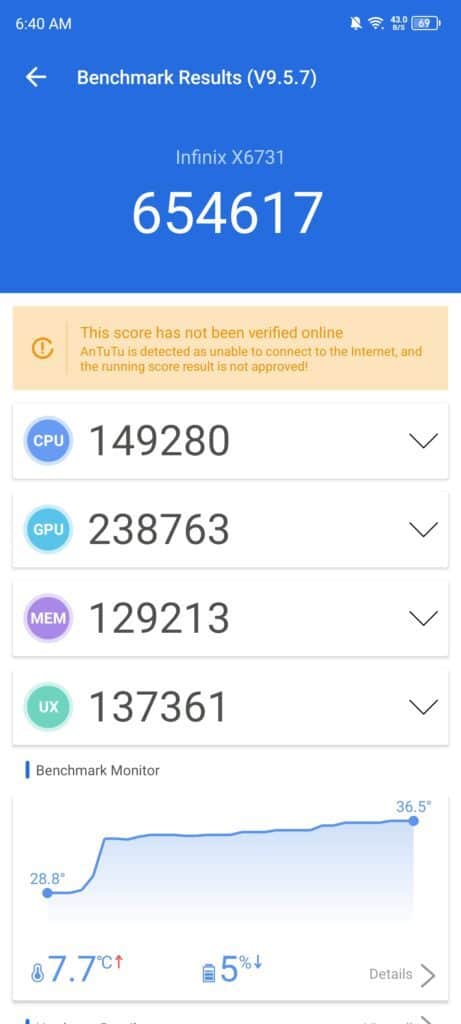
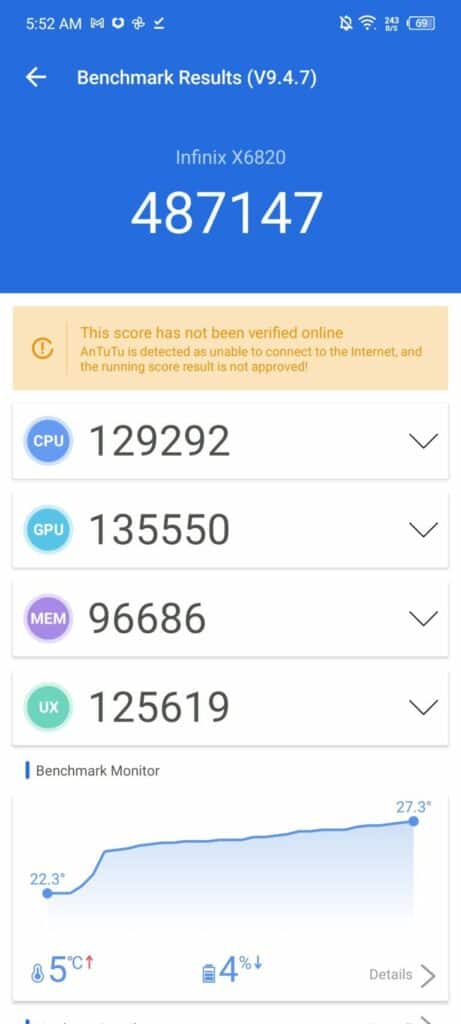
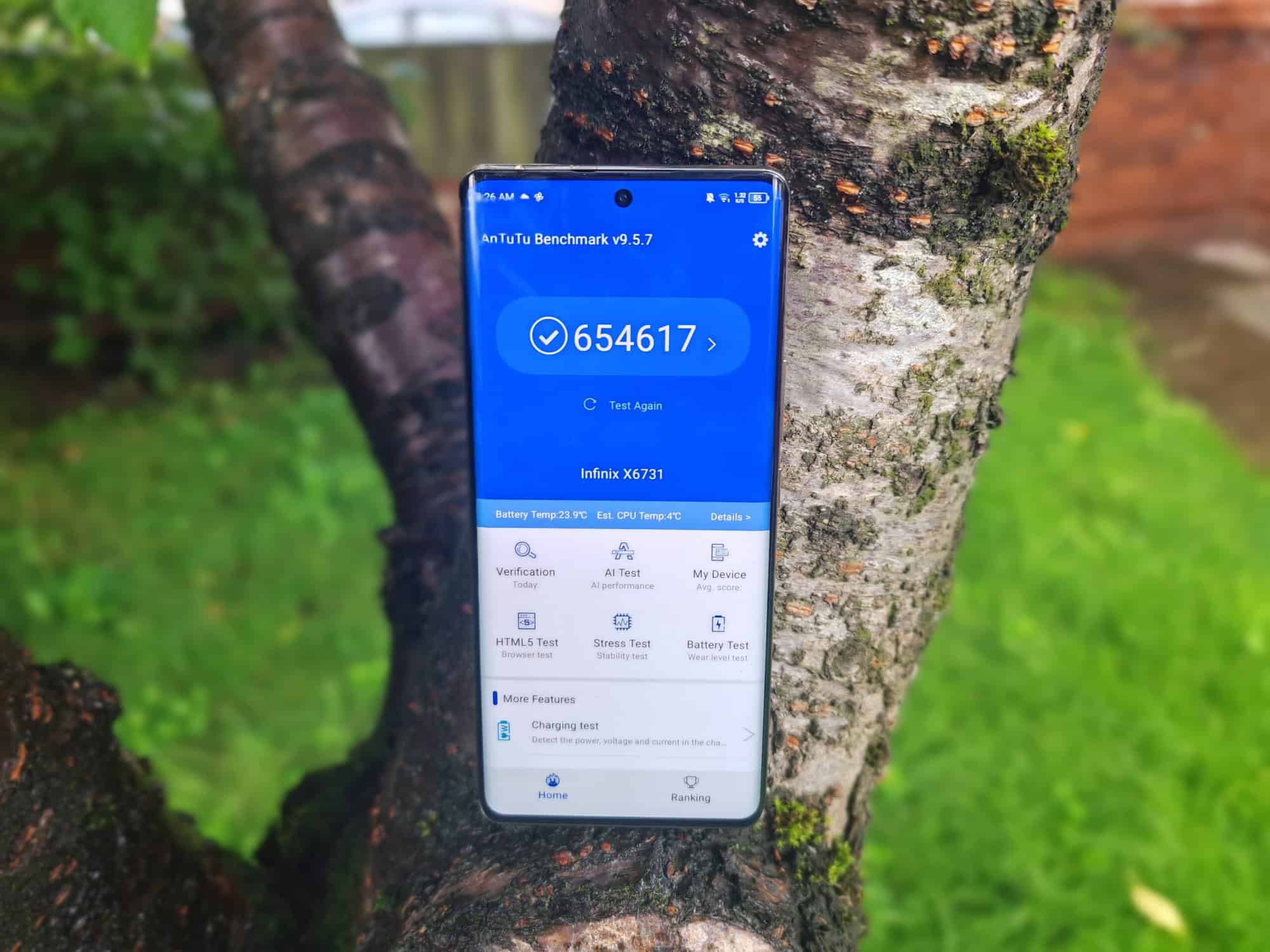
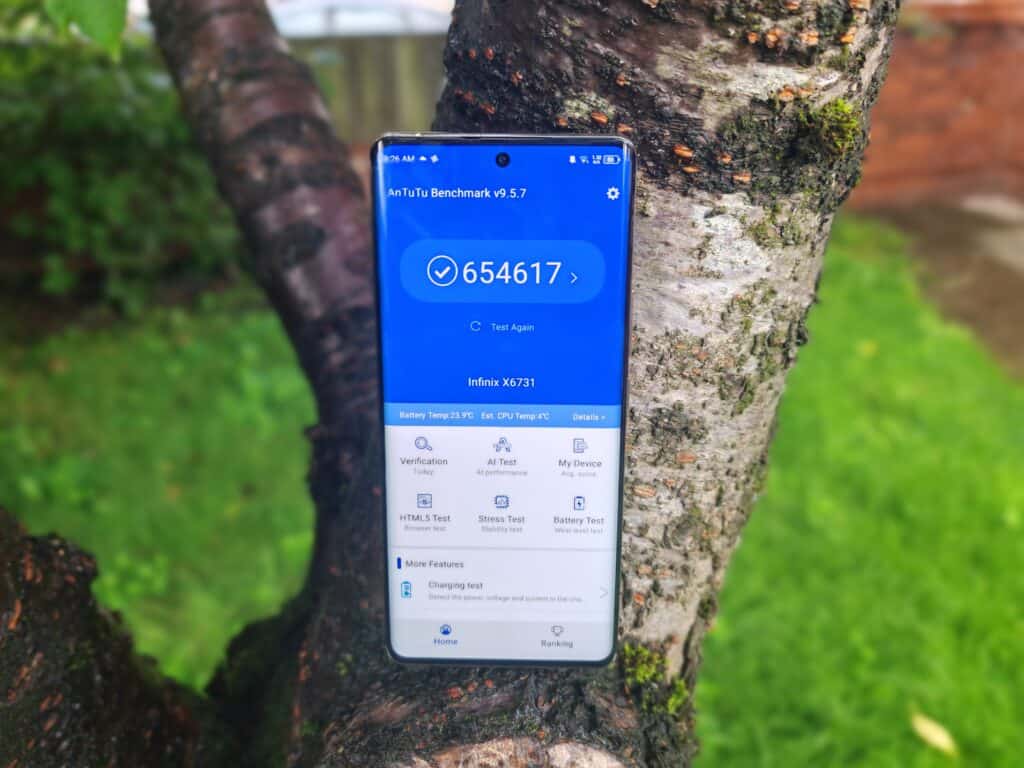
For some reason, I was unable to get Antutu V10 to run the standard benchmark. It kept trying to force me to use the lite version. However, I managed to get V9 to work.
[table id=571 /]
For the Dimensity 8020 vs Dimensity 8050, there is a negligible difference, with the Dimensity 8020 scoring just 2.5% behind the 8050, with the CPU result being the culprit for bringing the score down, with a result of 8% lower.
Compared to the Dimensity 920 on the Infinix Ultra, you are looking at a 38% improvement with the total score with the Dimensity 8020.
Geekbench 5 and 6
I tested with both Geekbench 5 and 6, as I have a historical list of Geekbench 5 results for a better comparison.
In Geekbench 6, the chipsets achieved:
- MediaTek Dimensity 8020
- Single Core: 988
- Multi Core: 3341
- MediaTek Dimensity 8050
- Single Core: 1139
- Multi Core: 3408
For Geekbench 5, the results were:
[table id=573 /]
The scores are about what you would expect; the Dimensity 8050 is fractionally better than the Dimensity 8020. The Geekbench 6 results show a 15% uplift in performance for the single core, which matches the frequency difference.
The Dimensity 920 does OK for its single core result as it shares the same A78 core as the other two chipsets, but it falls significantly behind with multi-core performance. The Dimensity 8020 scores 45% higher.
3DMark Wildlife Stress Test & Thermal Throttling
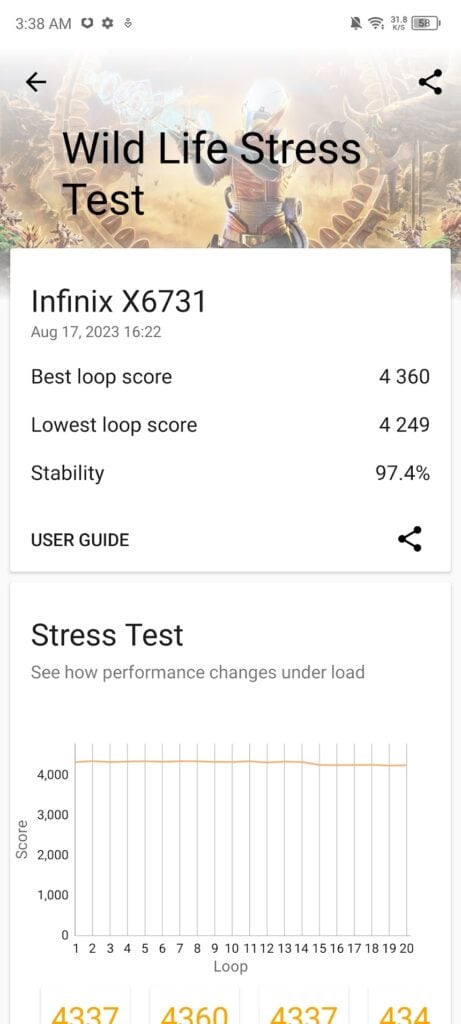
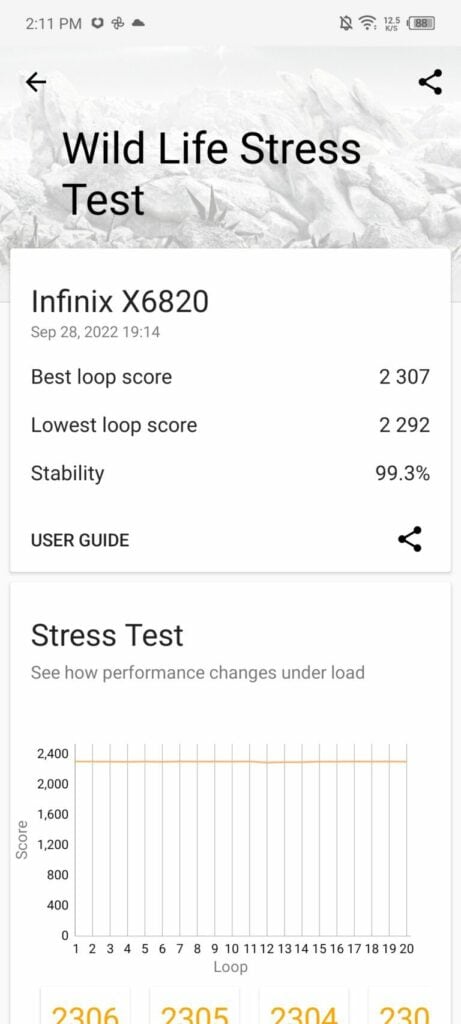
[table id=572 /]
Again, as expected, there is barely any difference between the Dimensity 8020 vs Dimensity 8050. The Dimensity 8050 has a 4.7% advantage for the high score.
The main difference to highlight is the massive improvement in performance, going from the Infinix Ultra to the Zero 30.
The Dimensity 8020 achieves a score that’s 89% higher than the Dimensity 920 on the Ultra. This makes the Infinix Zero 30 a much more appealing option for anyone who enjoys gaming on their phone.
Overall
The Infinix Ultra launched at a relatively high price point of $520 Infinix, and I felt like the Dimensity 920 didn’t quite live up to Infinix’s flagship classification.
The MediaTek Dimensity 8020 is a decent mid-range chipset and a welcome upgrade from the Dimensity 920. You are looking at a significant improvement in the overall performance. Geekbench shows a 38% improvement on the CPU side of things, but it is 3DMark Wildlife where the Dimensity 8020 really shines, with an 89% higher score than the Dimensity 920.
The Infinix Zero 30 will inevitably launch at a higher price point than the Note 30 VIP, which has the Dimensity 8050. It, therefore, seems a bit bizarre that Infinix would choose to put a lower-spec chipset in its flagship device. However, the performance difference is negligible, so it doesn’t matter that much.