Any links to online stores should be assumed to be affiliates. The company or PR agency provides all or most review samples. They have no control over my content, and I provide my honest opinion.
Earlier this week, Xiaomi announced their two latest phones, the Xiaomi 13T and the 13T Pro.
Both phones have impressive specifications while being relatively affordable compared to flagship phones that use the Qualcomm Snapdragon 8 Gen 2. Instead, these two phones use MediaTek, with the Xiaomi 13T using the Dimensity 8200-Ultra and the 13T Pro using the Dimensity 9200+.
I have the Xiaomi 13T in for review, and this will be live in the next week or two. In the meantime I have done some basic benchmarks to see how the Dimensity 8200-Ultra competes against other chipsets.
Sadly, I don’t have the 13T Pro, so I can’t compare the MediaTek Dimensity 9200+. However, I have the Honor Magic5 Pro with a Snapdragon 8 Gen 2 and the Realme GT Neo 3 with the Dimensity 8100.
Dimensity 8200-Ultra vs Dimensity 8100 vs Snapdragon 8 Gen 2 Specification
[table id=592 /]
Dimensity 8200-Ultra vs Dimensity 8100 vs Snapdragon 8 Gen 2 Benchmarks
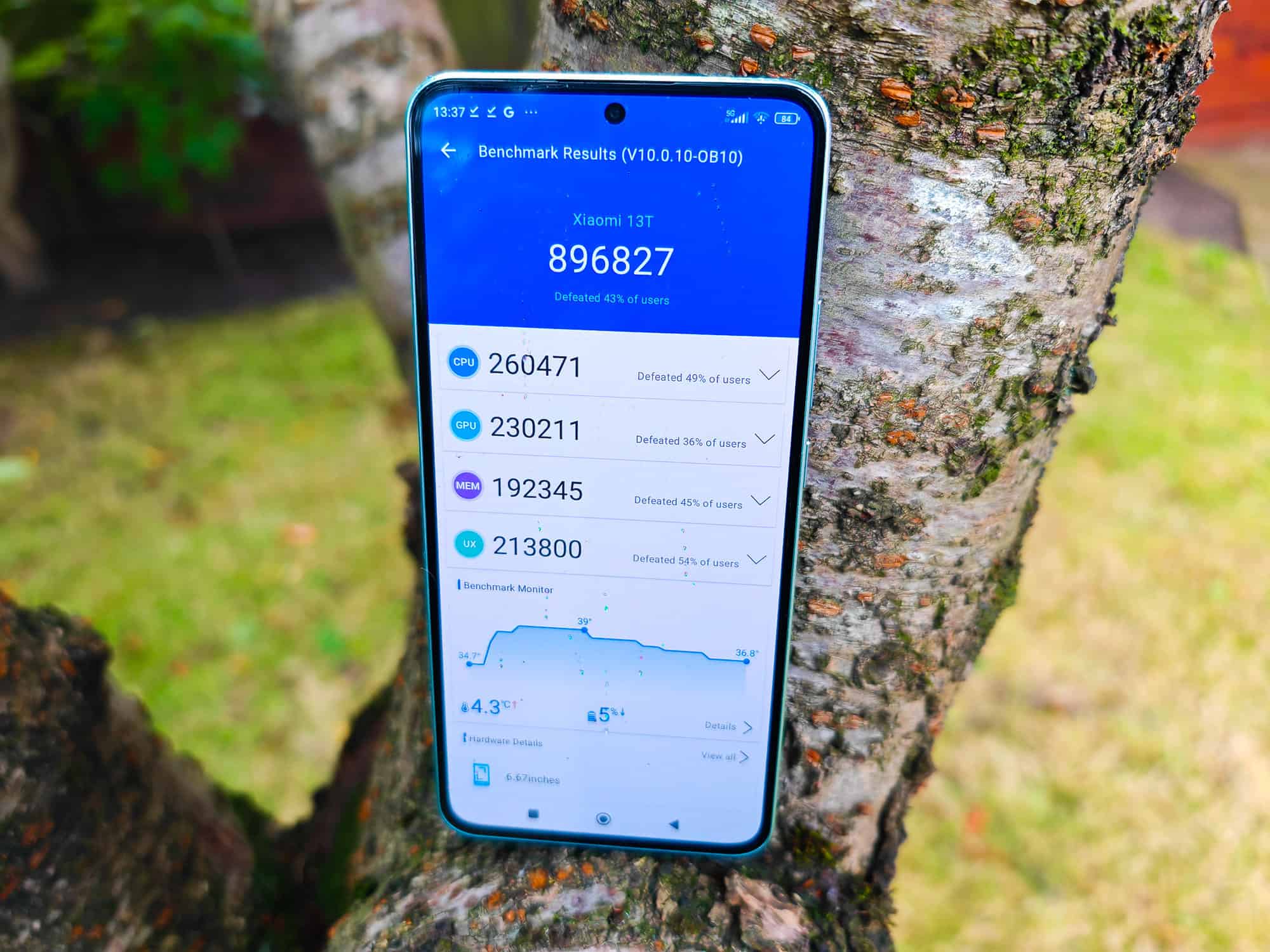
Antutu
[table id=549 /]
It comes as no surprise that the Snapdragon 8 Gen 2 outclasses the Dimensity 8200-Ultra by a considerable margin. Looking online, the Xiaomi 13T Pro with the MediaTek Dimensity 9200+ achieves a score of 1,322,572 which almost matches the Snapdragon 8 Gen 2.
As for the Dimensity 8200-Ultra it achieves an excellent score, though it is only fractionally ahead of the Realme GT Neo 3 with the Dimensity 8100.
Geekbench
Geekbench 5
[table id=306 /]
Geekbench 6
[table id=593 /]For some odd reason, I can’t get Geekbench 6 to run on the Realme GT Neo 3.
In Geekbench 5, the results are good, but with it being limited to the Cortex-A78, it lags behind the relatively old Qualcomm Snapdragon 888. However, it is arguably better than the Google Tensor chipset, with a much higher score for multicore.
It then has a small advantage over the Dimensity 8100 with a score that’s 4% higher for the single performance,
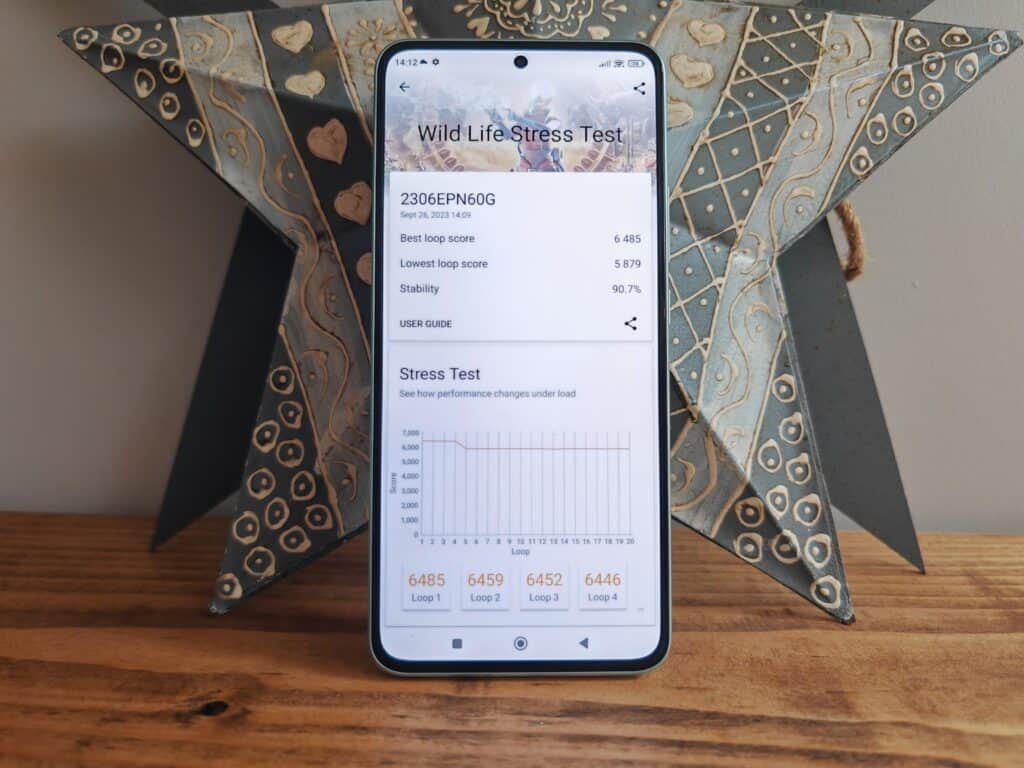
3DMark Wildlife Stress Test & Thermal Throttling
[table id=373 /]
The 3DMark Wildlife reveals impressive results. Of course, it can’t compete with the Snapdragon 8 Gen 2, but it compares well to all other chipsets. Even when you look at the Snapdragon 8 Gen 1, due to the superior thermal efficiency, the score is more stable, and the low score is only 3% less than the Snapdragon. Again, due to the lack of thermal throttling, the Dimensity 8200-Ultra is a superior chipset to the Google Tensor on the Pixel 6 Pro for prologued gaming sessions.
In comparison to the Dimensity 8100, the high score is 19% better, and the low score is 9% better.
Overall
The Dimensity 8200-Ultra is an excellent upper mid-range chipset that will offer a flagship-like user experience for most scenarios.
The Xiaomi 13T with 8+256G is priced at £549, which I think is a bargain considering the overall specification. There are not many phones at this price point with two excellent rear cameras. I’d say the package as a whole makes this a more appealing phone than the Pixel 7/8.
While I haven’t personally tested the Xiaomi 13T Pro it looks like the MediaTek Dimensity 9200+ will offer a similar level of performance as the Snapdragon 8 Gen 2. The base configuration of this phone comes with 12GB RAM and matches the 256GB storage, you then have Wi-Fi 7 support (vs Wi-Fi 6) and the 120W hyper charger.
The Xiaomi 13T Pro only costs an additional £100, and if you can afford that extra money, then I’d say there is enough of a difference with the Pro model to justify buying it over the standard 13T.