Any links to online stores should be assumed to be affiliates. The company or PR agency provides all or most review samples. They have no control over my content, and I provide my honest opinion.
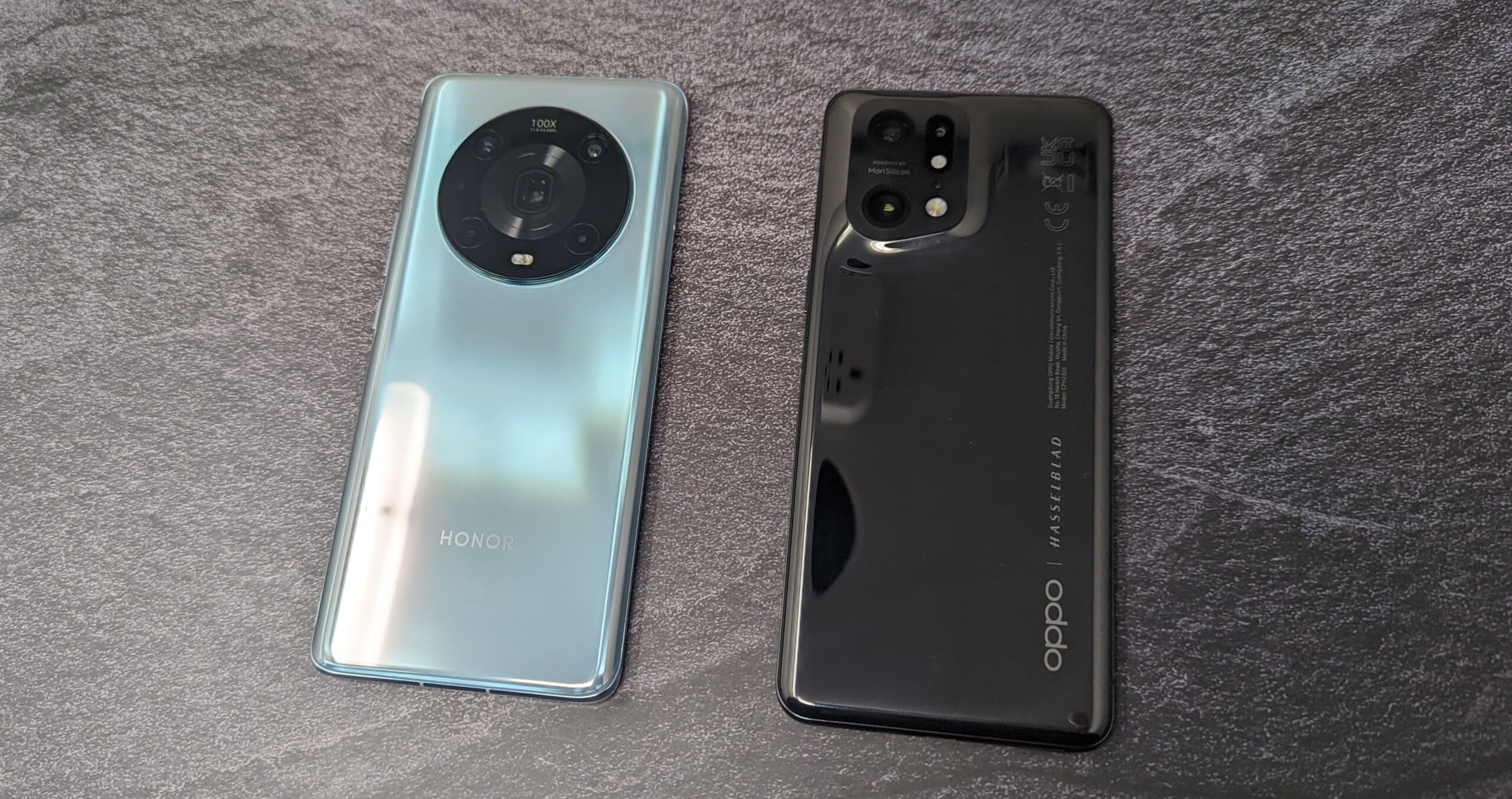
I have made this performance comparison purely because I am in the middle of reviewing both the Honor Magic4 Pro and the OPPO Find X5 Pro.
Both these phones have a similar specification, so theoretically, they should provide similar performance, but software optimisation will likely make a difference.
I have also added historical data from older phones. In some cases, I have reused old tables, so there is a bit of a mix of devices, but I have made sure to include the OPPO Find X3 Pro, which will provide a good comparison between generations of chipsets.
My full review of the Honor Magic4 Pro and the OPPO Find X5 Pro will be live over the next few days.
Antutu
[table id=331 /]
For the Antutu results, I didn’t have a record of the OPPO Find X3 Pro and had to use the official results off the Antutu website.
The new OPPO Find X5 Pro provides a moderate increase in performance compared to the previous generation with an 8.4% difference.
Then the Honor storms ahead with a result 11% higher than the Find X5 Pro, setting the trend for the rest of the benchmarks.
Geekbench
[table id=306 /]
Geekbench is similar showing the direction the two brands have taken towards performance. The Honor has a massive single core speed with a 10% increase from last year’s OnePlus 9 Pro.
The OPPO is much more reserved, with a lower result than some of last year’s phones and only a 5% increase over the X3 Pro.
The single core result on the Honor is quite close to the Redmagic 7, which indicates they are pushing the chipset to its limits.
Multi core results have remained largely static between generations.
3DMark Wildlife Stress Test
[table id=373 /]
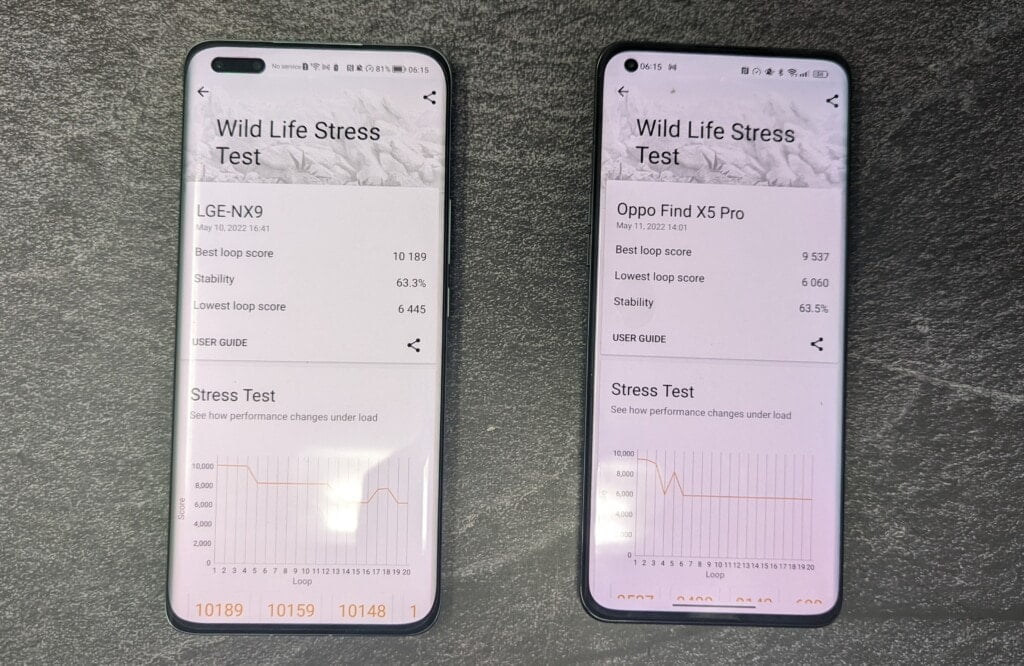
Again, we see the OPPO taking a more reserved approach to performance. I would have thought this would have led to improved stability, with the phone less likely to reach peak temperatures, but this is not the case.
Again, the Honor pushes things to the limit and has a higher peak result than the gaming focussed Redmagic 7. However, with no active cooling, it can’t maintain this score for long and has a much lower stability score.
With both the OPPO and Honor, there is a gigantic performance increase from the previous Snapdradragon 888. Comparing the X3 Pro to the X5 Pro, you have a 65% uplift in the high score, with the low score being higher than the high score on the X3 Pro.
Stability remains about the same between generations, it is only the Pixel 6 with its Tensor chipset that goes significantly lower.
PCMark Work 2.0 & Battery Life
[table id=332 /]
PCMark always has odd results as it is dependent on how a company sets frequencies for certain tasks. Some brands also dial back performance when running the battery test.
In this case, OPPO has again taken a more reserved approach and scores lower than its predecessor. However, the benefit of this is a massive increase in its battery performance.
The OPPO does surprisingly well for the battery considering it has such a high performance score.
Power Saving Mode
After running the tests and partially writing this up, I realised the OPPO appears to have power saving on by default, and the Honor does not.
Once again, the two phones handle things quite differently.
With the power saving mode disabled, the OPPO has a small uplift in performance. Antutu increased by just 4.5% up to 880534, and the Geekbench single-core result increased by just 1.3% to 989.
Honor significantly dials down performance. The Geekbench dropped down to 860 and 29% reduction. Similarly, the Antutu result dropped down to just 737712, a 21% reduction.
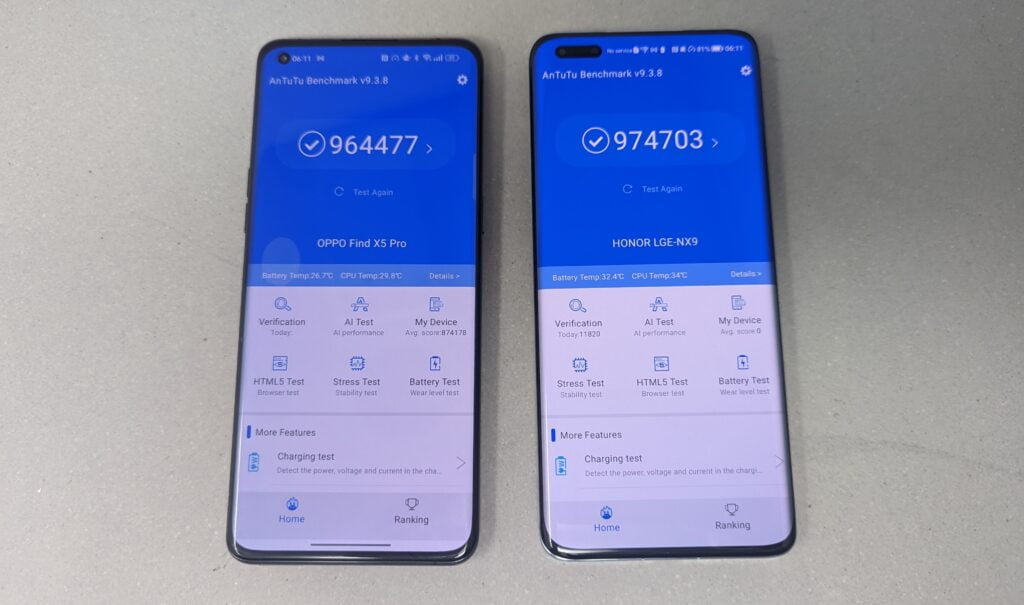
Both phones also have a performance mode, I didn’t run the benchmarks in this mode, but for a quick comparison, I tested Antutu:
- OPPO Find X5 Pro increased to 964477 (+14%)
- Honor Magic4 Pro increased to 974703 (+3.8%)
I will rerun all the other tests, including the battery test, over the next couple of days to see how much of a difference these settings make.
I assume the Honor will see a significant increase in battery life, and if this is the case, I prefer this approach to the OPPO, which only sees a small difference in performance.
Overall
I have tested three phones with the Snapdragon 8 Gen 1 now, and each company is taking a different approach on how to handle this powerful chipset.
Early impressions of the Honor Magic4 Pro are very positive, it seems to provide a good balance of high performance and battery life.
While the OPPO may seem less impressive, I personally favour efficiency over performance. Phones are so powerful now I don’t really need them going full throttle for most things, and I would sooner the phone last all day comfortably. For gaming, you can switch it to performance mode, which appears to bring up the performance to the same as the Honor.