Any links to online stores should be assumed to be affiliates. The company or PR agency provides all or most review samples. They have no control over my content, and I provide my honest opinion.
The Samsung M series has been an attempt by Samsung to regain some of its dwindling Indian market share that has been eaten away by Xiaomi and most recently Realme.
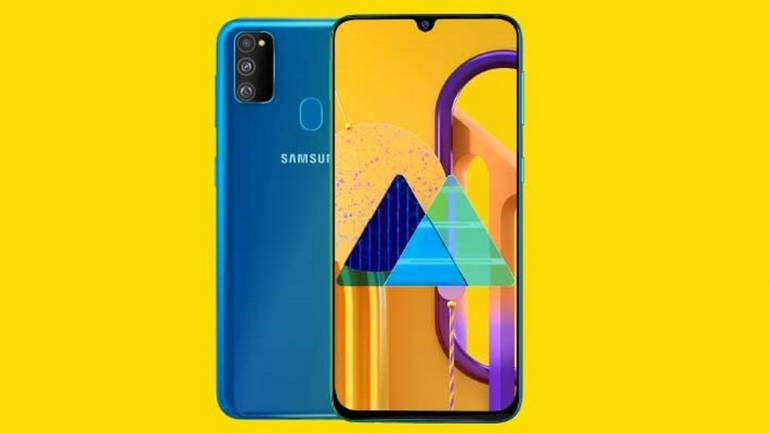
The Samsung Galaxy M30 was only launched in February this year, but Samsung is already updating it with an S model and it launches in the UK on November the 18th.
The phone has a massive upgrade from the previous Galaxy M30s switching from the Exynos 7904 to the Exynos 9611 which now features 4x Cortex-A73 cores @2.3 GHz and 4x Cortex-A53 cores @1.7 GHz, this does mean it can’t quite compete with the other two devices compared here, but I think for the price it is well worth your attention.
Price
I will point out the price first, as Samsung is the cheapest, so its sub-par chipset compared to the other two phones is justifiable. This is up for pre-order from Amazon for just £229.00 with 6GB/128GB
The Redmi Note 8 Pro is £240 for 6GB/64GB while the Xiaomi Mi 9T 6GB/64GB is £267.00.
[amazon box=”B07Z43CCYW”]
[amazon box=”B07Y81F2ZC”]
[amazon box=”B07SJG88JH”]
CPU
The Samsung can’t really compete, but it is no slouch either, it sits somewhere between the Snapdragon 665 and the Snapdragon 712 in terms of benchmarks.
The Redmi Note 8 Pro has the most powerful chipset with the Mediatek Helio G90T (12nm) which is great for gaming.
Then the Xiaomi Mi 9T uses the Snapdragon 730, this is the none G model so it isn’t quite as powerful.
Camera
The Samsung has a solid camera for the money including:
- 48 MP, f/2.0, (wide), 1/2″, 0.8µm, PDAF
- 8 MP, f/2.2, 12mm (ultrawide)
- 5 MP, f/2.2, depth sensor
Both the Xiaomi devices outclass it with their hardware, but I wonder what the end results are like, Samsung are well know for the image quality on their flagship devices and the software processing goes a long way.
The Xiaomi Redmi Note 8 Pro has
- 64 MP, f/1.9, 26mm (wide), 1/1.7″, 0.8µm, PDAF
- 8 MP, f/2.2, 13mm (ultrawide), 1/4″, 1.12µm
- 2 MP, f/2.4, 1/5″, 1.75µm (dedicated macro camera)
- 2 MP, f/2.4, 1/5″, 1.75µm, depth sensor
While the Xiaomi Mi 9T has
- 48 MP, f/1.8, 26mm (wide), 1/2″, 0.8µm, PDAF
- 8 MP, f/2.4, 53mm (telephoto), 1/4″, 1.12µm, PDAF, 2x optical zoom
- 13 MP, f/2.4, 12mm (ultrawide), 1/3″, 1.12µm
Battery
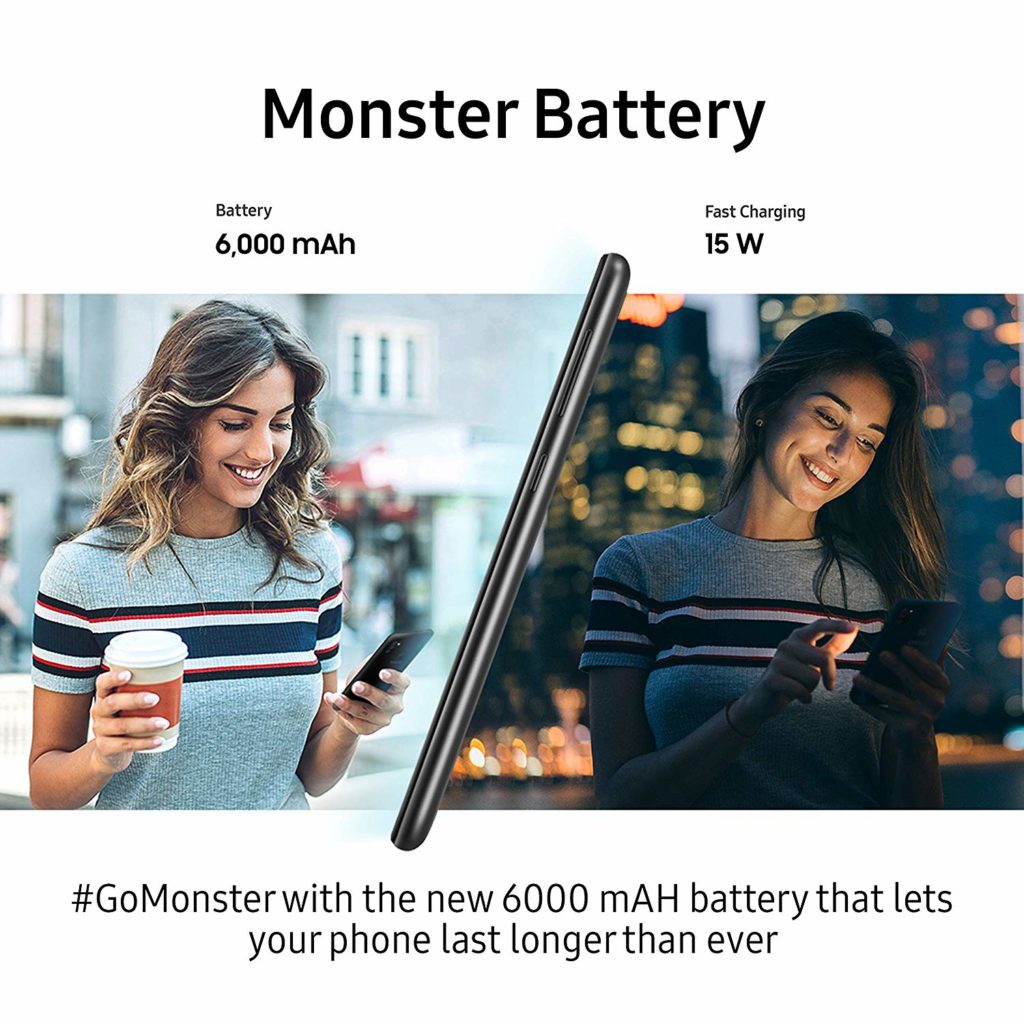
The Samsung has possibly the largest battery in the industry (ignoring random Chinese brands) at 6000mah which should last you two full days at least.
The Xiaomi Redmi Note 8 Pro has an impressive 4500mAh, but that’s still 25% smaller than the Samsung.
Finally, the Xiaomi Mi 9T has a 4000 mAh battery
Overall
Ok, so the Samsung doesn’t quite compete overall, but the other two phones are more expensive. The Xiaomi Redmi Note 8 Pro still probably represents better value for money, the price isn’t that far apart and you get a lot more phone for the price.
I perhaps should have chosen other phones at a similar price point. If you look at the popular Motorola moto g7 which costs £220 you get a Snapdragon 632, 4GB of RAM, 64GB storage and a dual camera.
Comparison Table
[table id=150 /]