Any links to online stores should be assumed to be affiliates. The company or PR agency provides all or most review samples. They have no control over my content, and I provide my honest opinion.
When the Qualcomm Snapdragon 860 was first announced, I expressed some criticism towards Qualcomm; rebranding an existing chipset seems lazy and a marketing gimmick.
However, I am not opposed to the reusing of old chipsets, I thought it was a superb idea with the Realme X3 SuperZoom. It is likely Qualcomm saw the value in this but wanted to make it a bit more consumer-friendly by giving old chipsets new names.
I recently received the Poco X3 Pro to review, which should be live at some point next week, but for now, let’s see how this new-old chipset performs against chipsets used in phones at a similar price point. Basically, this is all the Snapdragon 7 series phones and the more recent Dimensity based phones.
Poco X3 Pro vs Poco X3 NFC
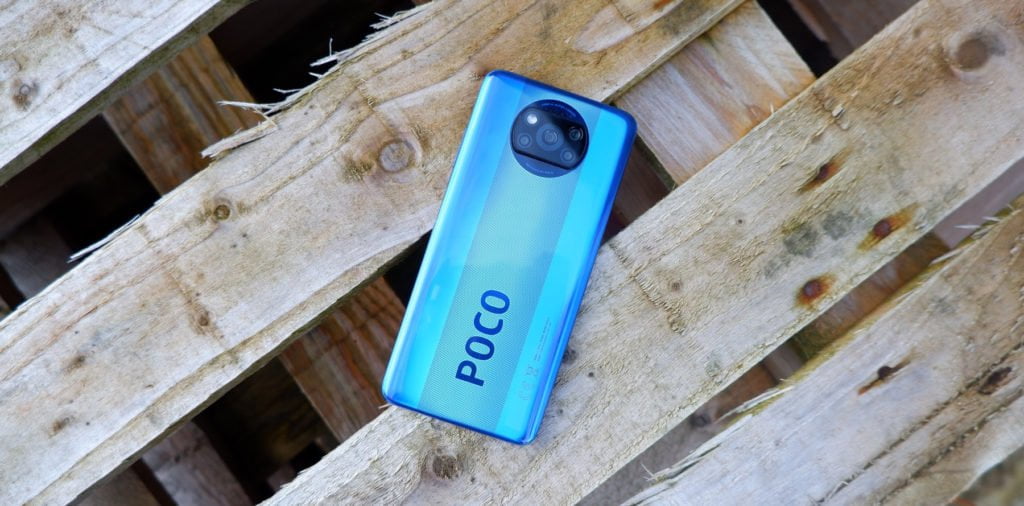
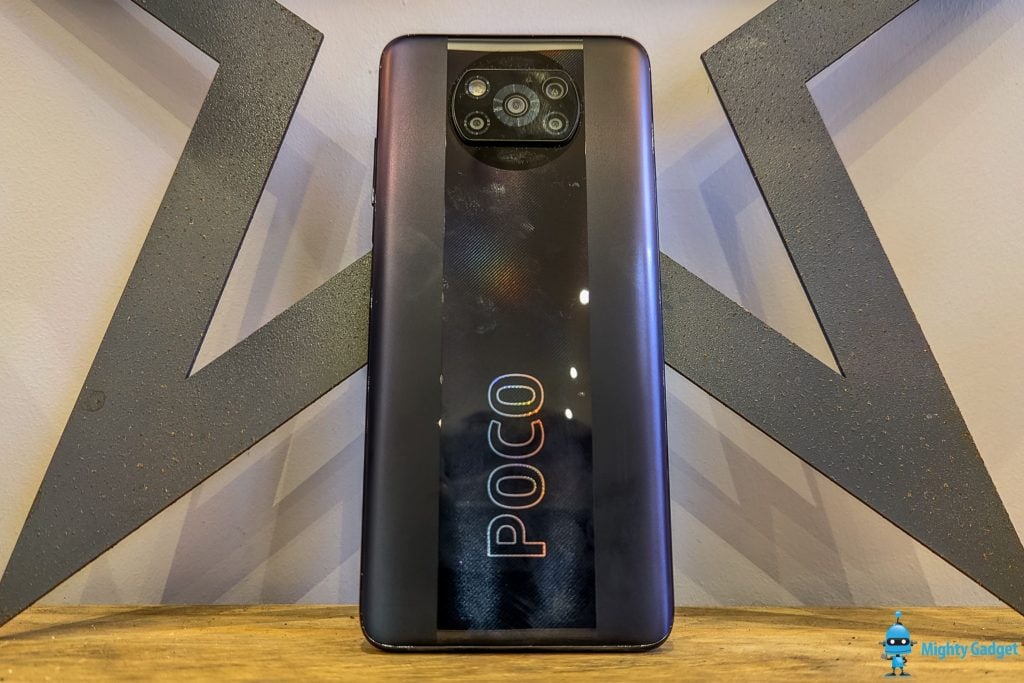
Before I delve into the numbers, it is worth pointing out that the Poco X3 Pro is a bit of an odd phone.
It has had a massive upgrade vs the preceding Poco X3 NFC thanks to the new chipset, superior base config and faster storage.
Things like the battery and display all remain the same.
However, the camera has had a significant downgrade, dropping from the superb (for budget phones) 64 MP Sony IMX682 down to the older 48MP Sony IMX 582. Similarly, the ultra-wide has dropped from 13MP to 8MP.
So, picking the Poco X3 Pro over the X3 NFC isn’t quite as easy as deciding if you can afford the extra 50 to 70 Euros (UK stock isn’t available yet).
Snapdragon 860 vs 765G vs 732G vs 732G vs Dimensity 800 Benchmarks Specification
[table id=342 /]
In terms of spec, the SD860 is vastly superior to all the other chipsets, offer a 1x3x4 CPU design with four A76 cores, a significantly better GPU, all while being on the 7nm fabrication process, which is still small and efficient by today’s standards.
It is worth noting that the Snapdragon 860 is 4G, while the SD855+ could be 5G. It was optional if they included the 5G modem. So, in this case, to make phones more affordable, it made no sense here. If your budget is under £250 for a phone, I think you can live without 5G (or pay £50 extra for the Poco F3)
Snapdragon 860 vs 765G vs 732G vs 732G vs Dimensity 800 Benchmarks
Antutu Benchmarks
[table id=340 /]
Antutu has recently switched to V9, but I found a V8 copy to try and accurately compare against.
As we can see, the two-year-old tech in the Snapdragon 860 completely destroys all the mid-range chipsets.
There is a 44.7% performance advantage vs the Snapdragon 765G, which is still used in many premium-priced phones such as the Pixel 5 and Oppo Reno 4 Pro 5G.
There is a 58% advantage vs the SD73G found on the Poco X3 NFC and a 67.7% advantage over the just launched Realme 8 Pro.
3DMark Benchmarks
[table id=321 /]
3DMark has also been messing around with their benchmarks, they are clearly trying to do away with the Slingshot Extreme test. The OnePlus 9 Pro was the first phone I have seen with a Max score result, but this now extends down to the Poco X3 Pro too. So it is Wild Life that needs to be used now.
Therefore, for a couple of the below results, I had to pull the official figures for Wild Life because I had not tested with it when I had the phone in for review. Whilst at it, I also copied the official figure for the Redmi K40 / Poco F3.
Here we see a similar massive performance gap between the SD860 and the midrange chipsets, basically more than double any of the Snapdragon 7 series phones.
PCMark Benchmarks
[table id=341 /]
PCMark results are always all over the place because each company tweaks their software for certain tasks differently.
The notable difference here is the 7.8% improvement in the PCMark score but a 10-hour reduction in battery performance vs the two Poco models. The Poco X3 NFC had a ludicrous battery performance, so it hardly seems fair to compare it to anything else. You certainly won’t be disappointed with the Poco X3 Pro battery, even if it is not as good as the X3 NFC.
Androbench Storage Benchmarks
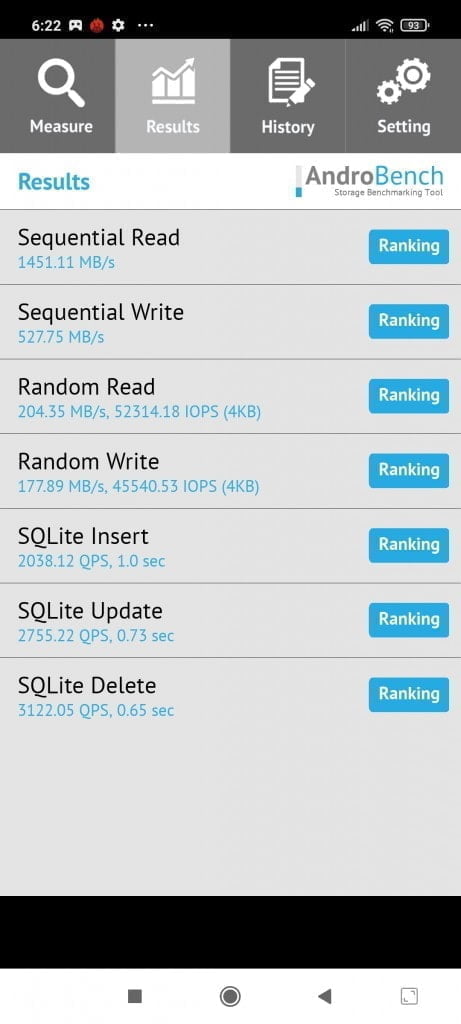
Poco X3 Pro 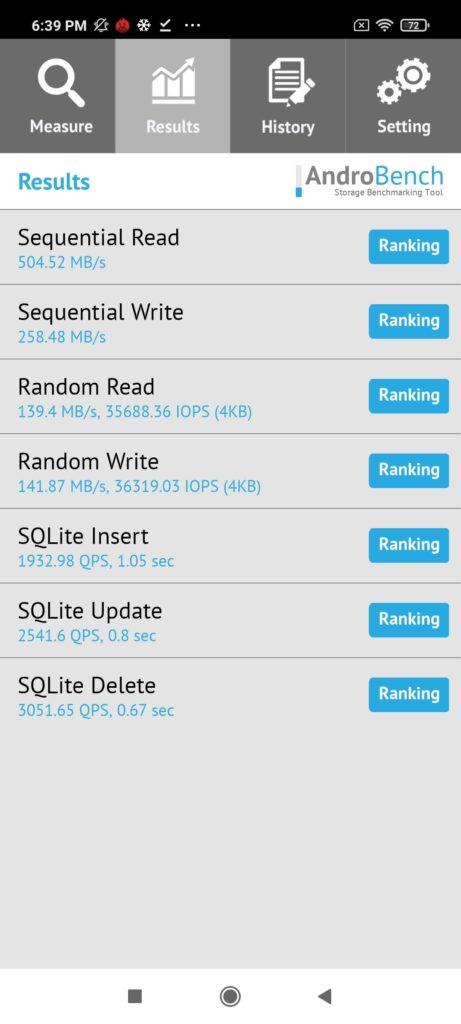
Poco X3 NFC
I don’t seem to have a historical table with all the Androbench results, nor do I normally use it in my comparisons. However, the Poco X3 Pro has UFS3.1 vs UFS 2.1 of all the mid-range options.
In comparison to the Poco X3 NFC you get:
- Sequential Read:
- Poco X3 NFC: 504 MB/s
- Poco X3 Pro: 1451 MB/s
- Sequential Write:
- Poco X3 NFC: 258 MB/s
- Poco X3 Pro: 527 MB/s
- Random Read:
- Poco X3 NFC: 139 MB/s
- Poco X3 Pro: 204 MB/s
- Random Write:
- Poco X3 NFC: 141 MB/s
- Poco X3 Pro: 177 MB/s
Overall
There is clearly a massive benefit to be had by using an older flagship chipset for newer affordable phones. The Snapdragon 860 offers incredible performance when compared to chipsets that are used in similarly priced phones.
There are still not many Dimensity based phones in the UK, so it will be interesting to see how MediaTek will compete in terms of price/performance when they do finally have phones on the market.
Hopefully, we will see more phones using the SD860 and SD870 over the year, and this trend of reusing older tech continues for future generations.