Any links to online stores should be assumed to be affiliates. The company or PR agency provides all or most review samples. They have no control over my content, and I provide my honest opinion.
With Realme and Xiaomi battling it out on the affordable end of the market, it has started to become increasingly difficult to single out a phone as being the highlight of a particular range.
Xiaomi is particularly bad as they have been releasing a lot of minor iterations to their phones at slightly different price points, the Redmi K30i is essentially the K30 5G but with one change to the main camera. The Redmi K30 5G Racing is the same as the K30 but a switch to the new faster Snapdragon 768G chipset.
Realme have followed suit, the Realme X50 Pro Player is the same as the Realme X50 Pro 5G but with downgraded cameras at a lower price point.
This is not necessarily a bad thing, more choice for the consumer is almost always a good thing, it allows you to find something for your budget that meets your requirements.
This does make life harder when it comes to choosing things. Last year when Realme launched the X2 Pro there was no question it was an amazing phone, almost nothing at the time could come close to the spec at that price. But with the launch of the X3 SuperZoom you have the X2 Pro sitting just below it, then the Poco F2 Pro and Realme X50 Pro sitting just above it which makes giving out a recommendation quite tricky.
Xiaomi Redmi 10X 5G launch with new Dimensity 820 chipset
With the launch of the Xiaomi Redmi 10X 5G models, we have yet another choice in the upper mid-range market. As usual, these are Chinese releases only, but we will be able to buy them through grey market importers, and hopefully, some version of them will make their way to the EU/UK market at some point.
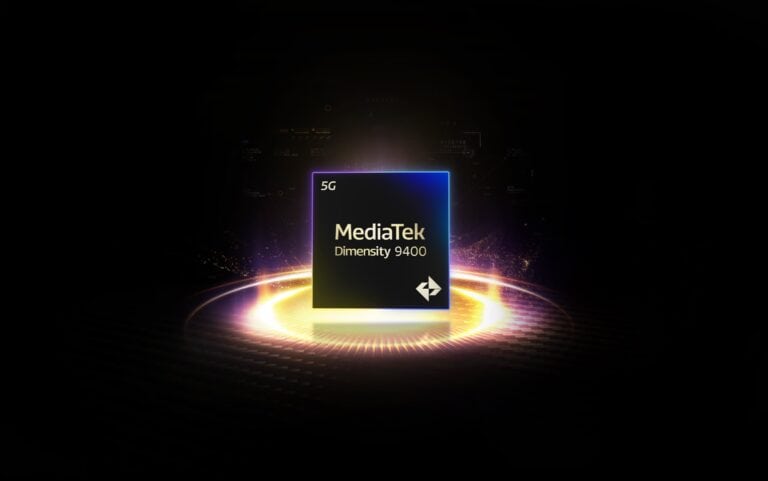
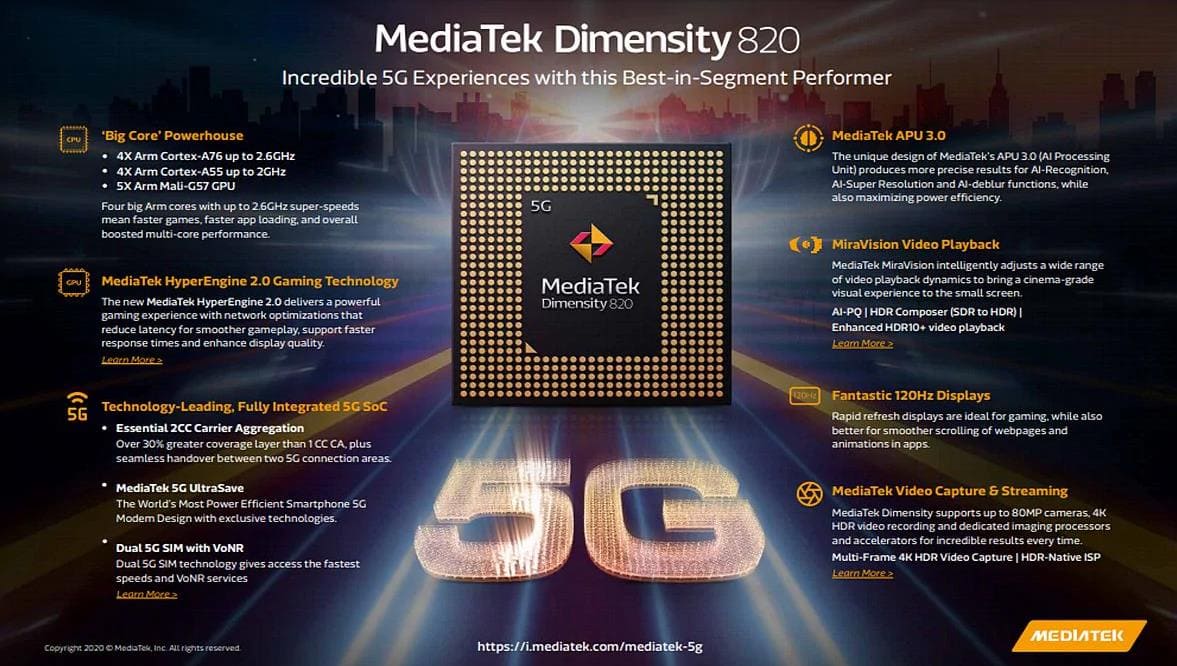
These two new phones use the brand new Dimensity 820 chipset. I have previously given MediaTek grief about their questionable release cycle offering almost no meaningful upgrade to the new chipsets they have released. The MediaTek Dimensity 820 is different, offering a substantial bum in specification compared to the Dimensity 800 with a 30% boost in clock frequencies and a 25% boost in the number of GPU cores.
This makes it sound like it could be one of the stand out chipsets for its price point.
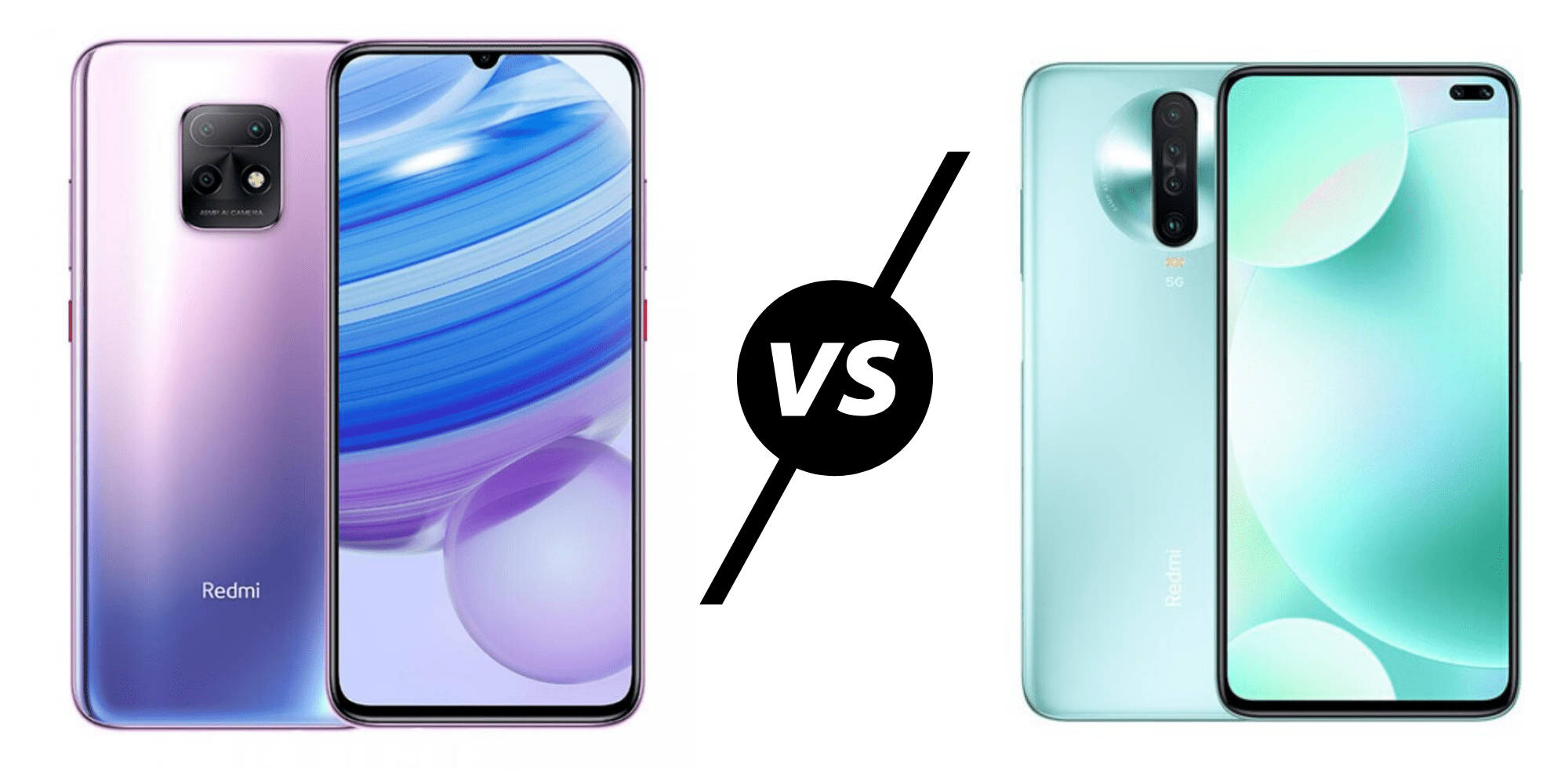
Xiaomi Redmi K30 5G Racing Edition with Snapdragon 768G
However, Qualcomm has also just launched an upgrade to their popular Snapdragon 765G chipset, and this is featured on the Xiaomi Redmi K30 5G Racing Edition.
When it was announced, it was very impressive, but the Dimensity 820 launch has taken the shine off a little. The SD768G offers a 0.4Ghz boost in frequency on the Prime core compared to the SD765G and the slower Kryo 475 Gold getting a boost of 0.2Ghz. This represents a 16.6% increase to its frequency for the Prime and 9% for the Gold.
Qualcomm then claims a 15% boost on the GPU.
This, therefore, gives Redmi two new upper mid-range phones priced very close together – again, making recommendations much harder.
So which is best?
Dimensity 820 vs Snapdragon 768G
[table id=236 /]
Ram and Storage
The Xiaomi Redmi 10X Pro 5G starts at 8GB/128GB but the affordable none Pro starts at 6GB/64GB
The K3 Racing comes in 6GB/128GB.
All the phones use the older UFS 2.1 for storage, and only the Redmi 10X models have a microSD slot.
Benchmarks
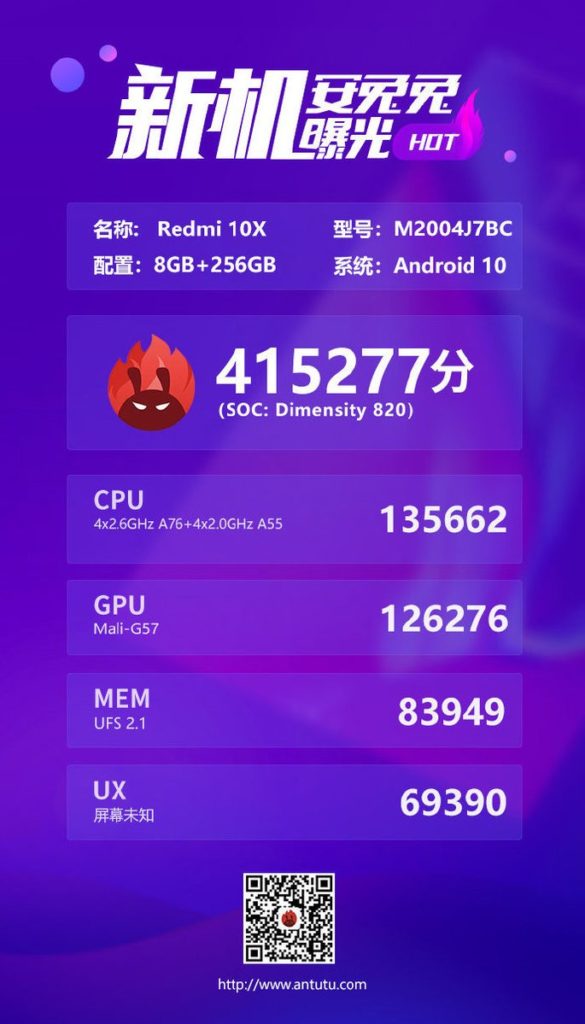
At the moment all we know is that the Xiaomi Redmi K30 Racing Edition with the Snapdragon 768G scores 360K+ in Antutu
The Mediatek 820 comfortably beats this on the Redmi 10x with a score of 415277 which is around 15% higher.
Furthermore, MediaTek offered up some carefully selected benchmarks that showed the Dimensity 820 taking on and beating the Snapdragon 765G (not the SD768G). For instance, the new 7nm SoC defeated Qualcomm’s part by +7% and +37% in Geekbench 4.2 tests and managed a massive 300% higher performance in an apparent AI benchmark.
Display
There is not much difference in display size, and the phones all have the same resolution, but the Redmi 10X series uses an AMOLED display running at 60Hz while the K30 Racing has an IPS display running at 120Hz.
The 10X range uses a due drop selfie notch housing just one lens while the K30 has a punch hole house a selfie camera and depth sensor.
Camera
The Xiaomi Redmi 10X Pro has the most versatile rear camera overall thanks to a zoom lens, but its primary lens is not as good as the K30
Xiaomi Redmi 10X Pro has:
- Rear:
- 48 MP, f/1.8, 26mm (wide), 1/2.0″, 0.8µm, PDAF
- 8 MP, (telephoto), PDAF, OIS, 3x optical zoom
- 8 MP, f/2.2, 119˚ (ultrawide), 1/4.0″, 1.12µm
- 5 MP, (macro)
- Front:
- 20 MP, 26mm (wide)
The standard 10X has the same setup minus the telephoto lens and uses a lower specced 16MP selfie camera
The Xiaomi Redmi K30 5G Racing has:
- Rear:
- 64 MP, f/1.9, 26mm (wide), 1/1.72″, 0.8µm, PDAF
- 8 MP, f/2.2, 116˚ (ultrawide), 1/4.0″, 1.12µm
- 5 MP, f/2.4, (macro), 1/5.0″, 1.75µm
- 2 MP, f/2.4, (depth)
- Front:
- 20 MP, f/2.2, 27mm (wide), 1/3.4″, 0.8µm
- 2 MP, f/2.4, 1/5″, 1.75µm, depth sensor
Battery
All the phones have huge batteries, the K30 technically has the smallest a 4500 mAh while both the 10X models have 4520mAh.
The standard 10X has just a 22W charge but the Pro goes up to 33W, then the K30 Racing has 30W.
Other Features
The standard 10X lacks NFC but the Pro and the K30 Racing both have it – this is important for UK users thinking about importing one of the phones. I would avoid any phone without NFC.
The 10X models appear to have an IP rating of 53, this is about as basic as it gets but it is better than nothing. The K30 Racing lacks any rating.
All the phones have a 3.5mm headphone jack.
Price
The Redmi K30 5G Racing Edition launched in China for CNY 2,000 (£228/$282) in a single 6 GB RAM and 128GB storage configuration. Official sales are scheduled to began on May 14.
The 10X 5G starts at CNY 1,599 (£181$224) 6/64GB making it the most affordable 5G phone on the market. There’s also a 6/128GB for CNY 1,799(£204/$252) as well as a 8/128GB trim for CNY 2,099 (£238/$294) and 8/256GB model for CNY 2,399 (£272/$336). Official sales begin on June 1.
The 10X Pro will be offered in 8/128GB for CNY 2,229 (£260/$322) and 8/256GB configuration going for CNY 2,599 (£294/$364). It goes on sale starting June 6.
Overall Recommendation
There is no clear best option, which was the point of this point.
I will rule out the none Pro model, it is a much lower price but no NFC, less storage, and lower specced camera.
The Pro model is about £30 more than the Redmi K30 5G Racing and it has the advantage of a more powerful chipset, more ram, a microSD slot. Depending on your preferences you may prefer an AMOLED display or you may think this is a disadvantage to the 120Hx IPS display of the K20 Racing.
The K30 Racing has a better specced primary camera, but it will be less versatile overall than the 10X Pro with its zoom lens.
There are currently no listings from grey import sites for either the Redmi 10X or vs Redmi K30 5G Racing
Specification Comparison Table
[table id=240 /]